
The 88th Annual Meeting of The Meteoritical Society will take place in Frankfurt am Main, Germany. Below, you will find information about the host city, conference venues, accommodation, and transportation.
Host City
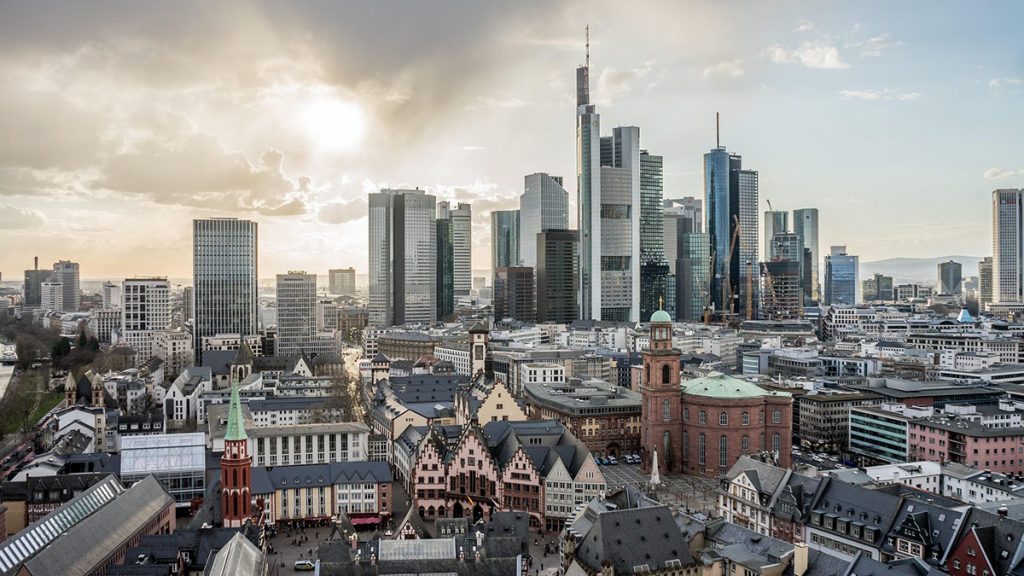
Frankfurt am Main is the host city for this year’s Meteoritical Society Meeting. It is the largest city in the German state of Hesse with over 800,000 residents and is home to the European Central Bank. Frankfurt is a very international city and offers a unique mix of old and new. See the city’s website for more details.
Venues
The conference will take place at several venues, all located in the heart of Frankfurt am Main and easily accessible by public transit or foot.
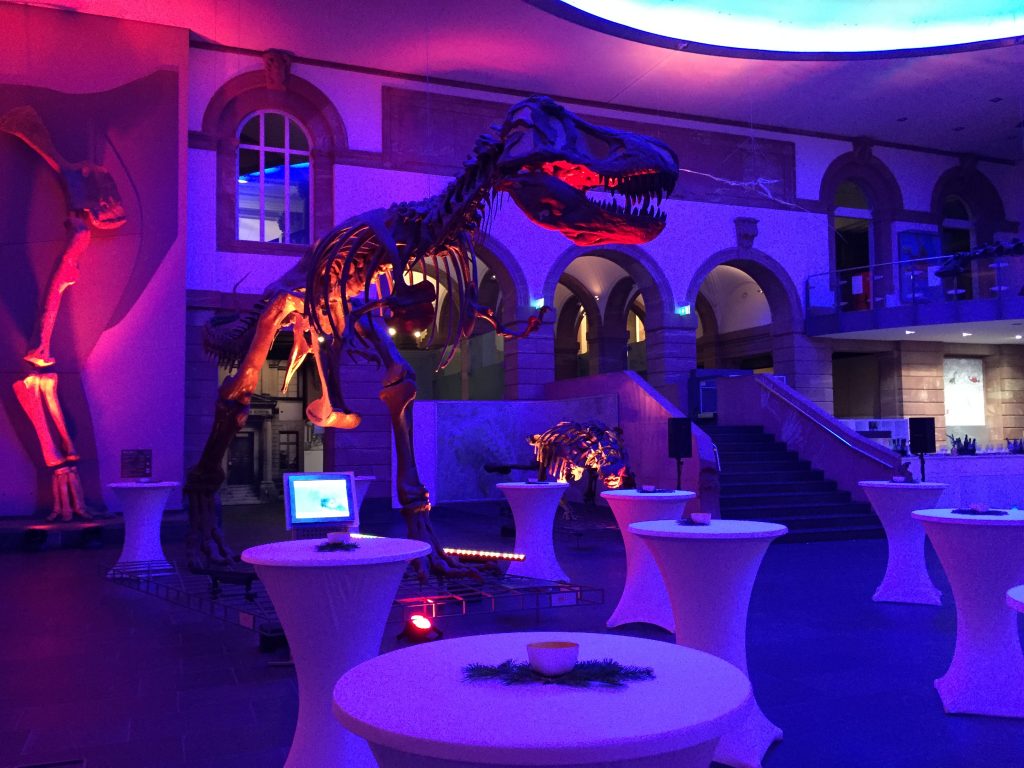
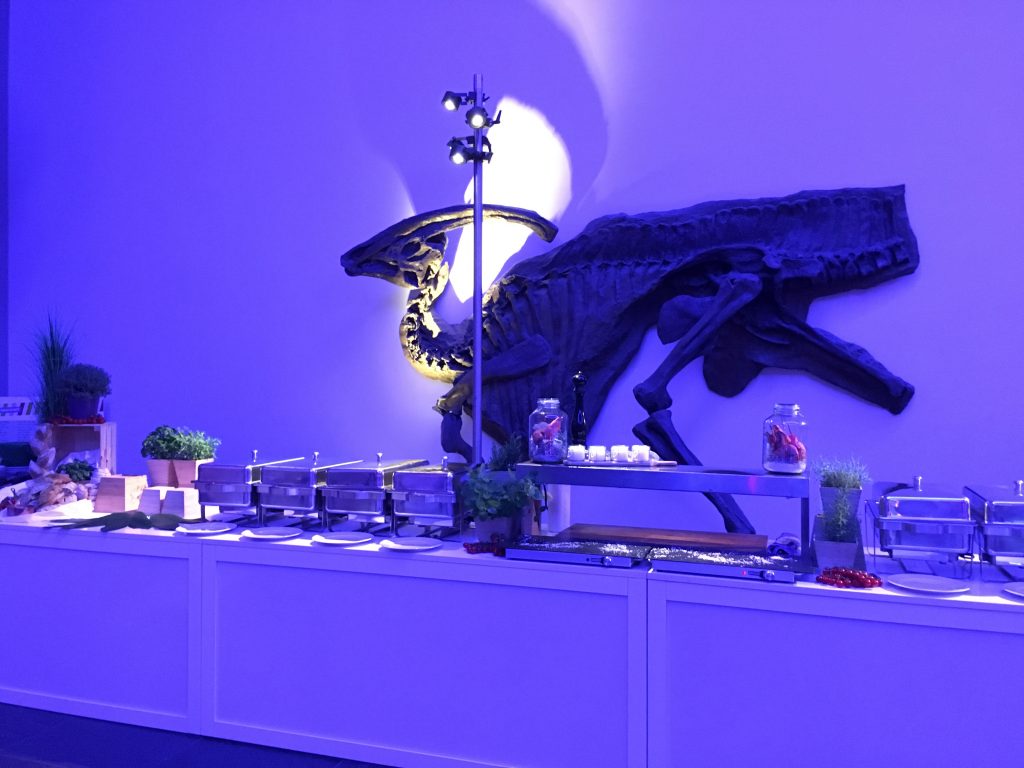
Senckenberg Natural History Museum
Jügel House (Jügelhaus)
60325 Frankfurt am Main
Program items: Sunday evening icebreaker and conference workshops
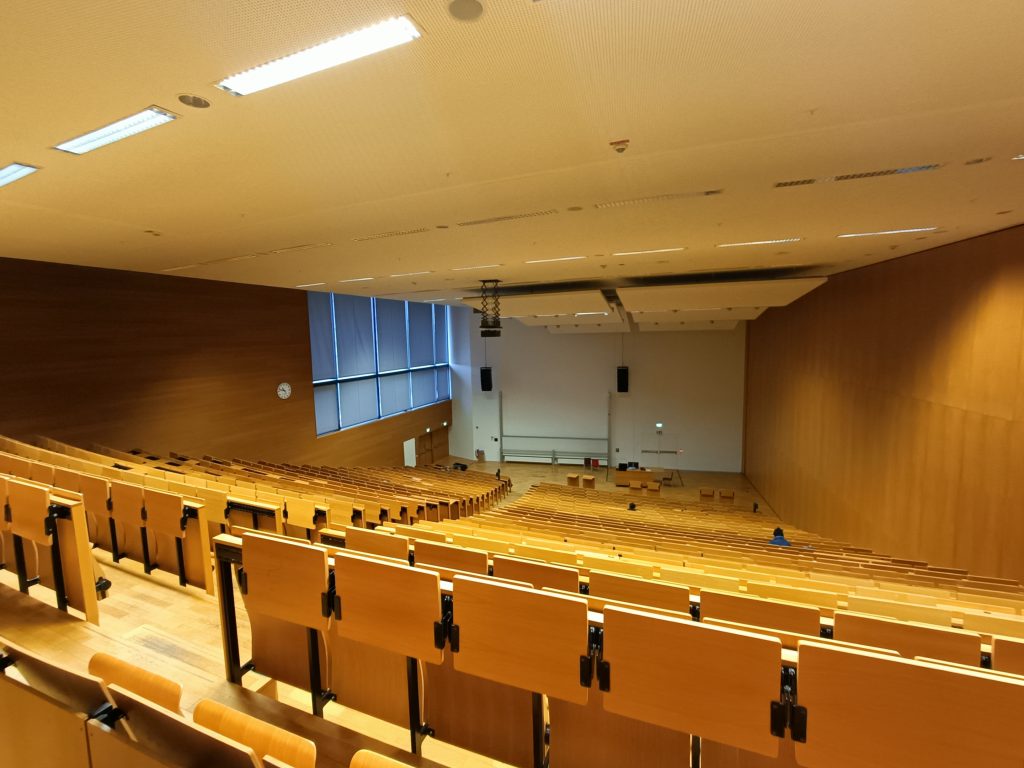
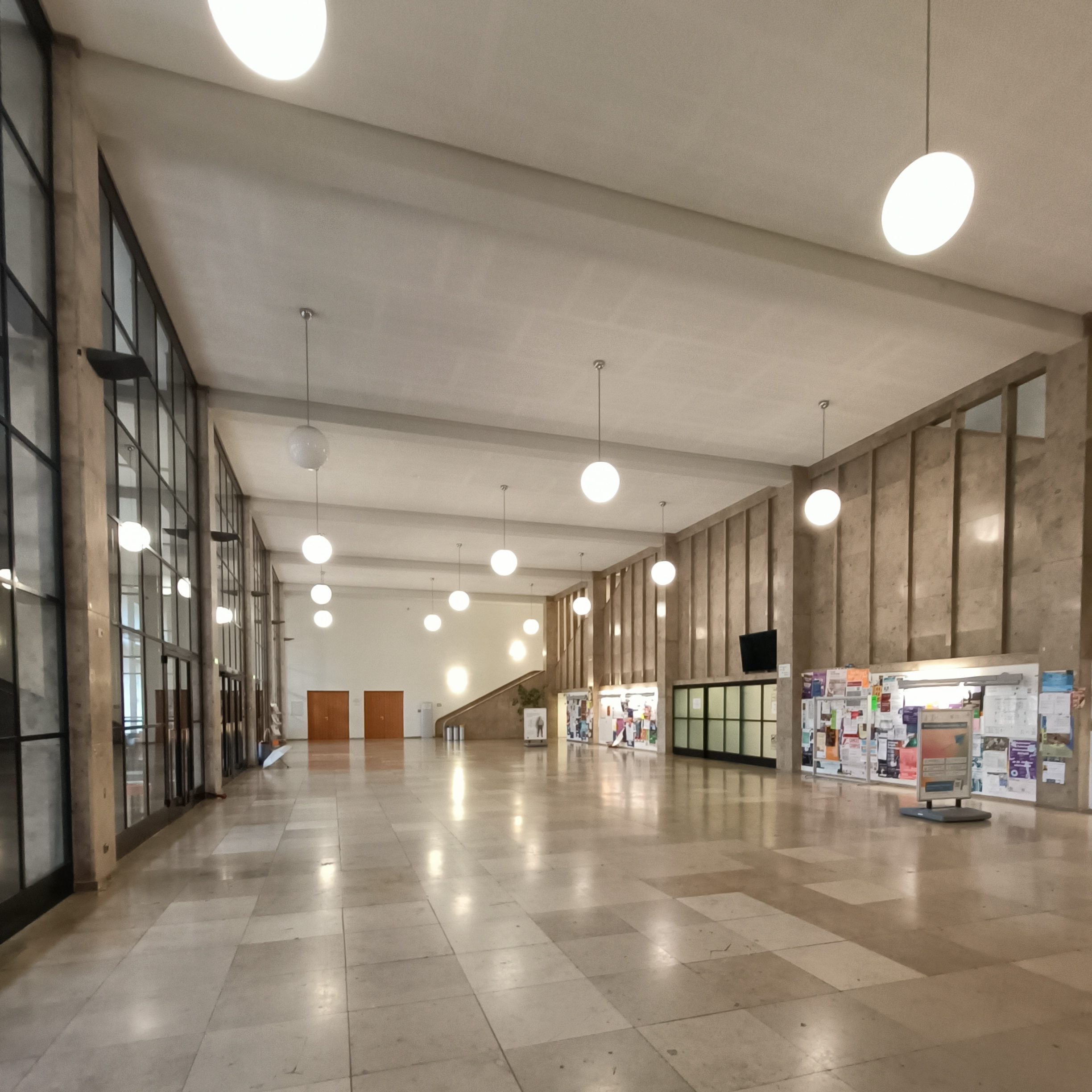
Goethe University Westend Campus
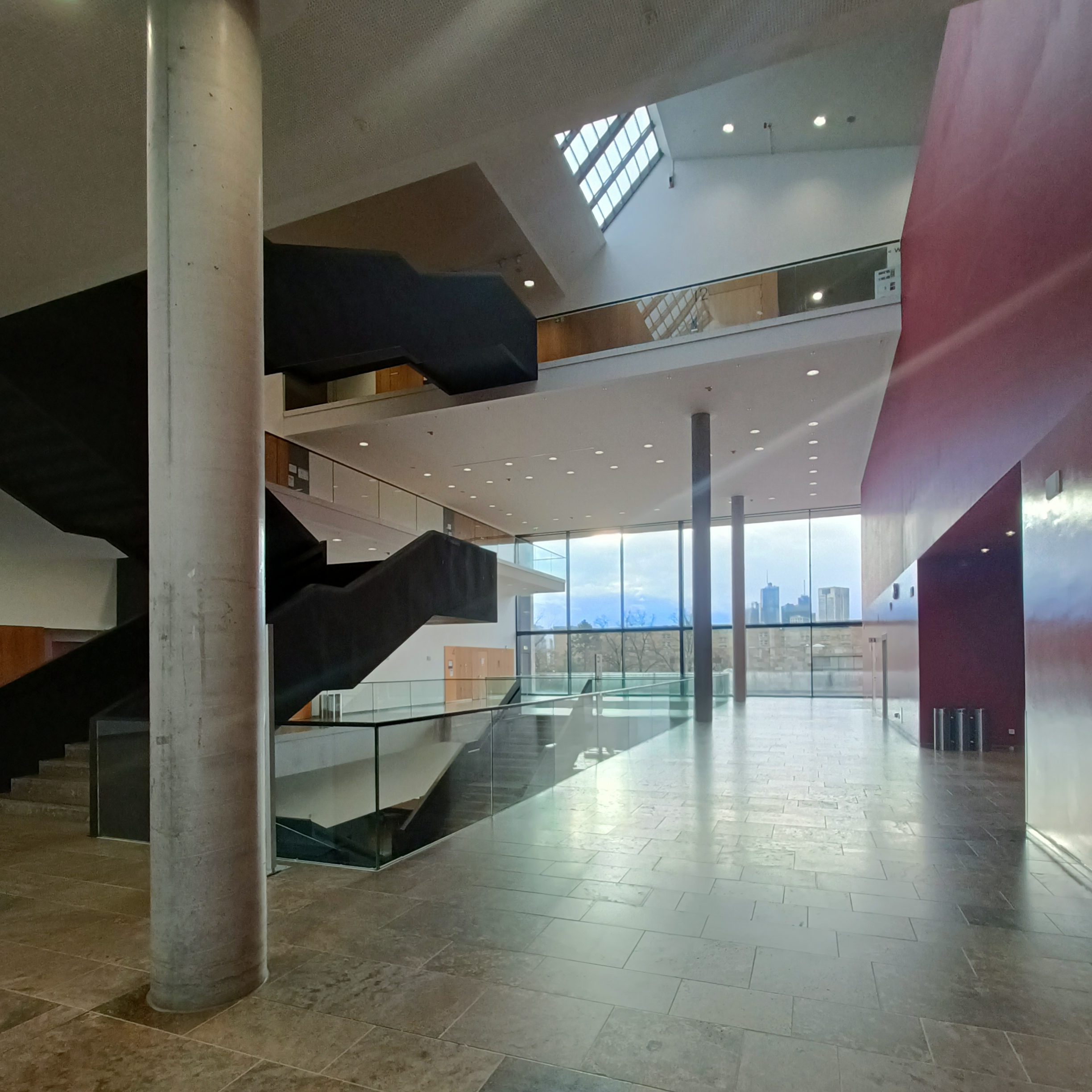
Lecture Hall Center (Hörsaalzentrum)
60323 Frankfurt am Main
Program items: Scientific lectures, Barringer lecture, poster sessions, exhibitor booths, and registration
Goethe University Westend Campus
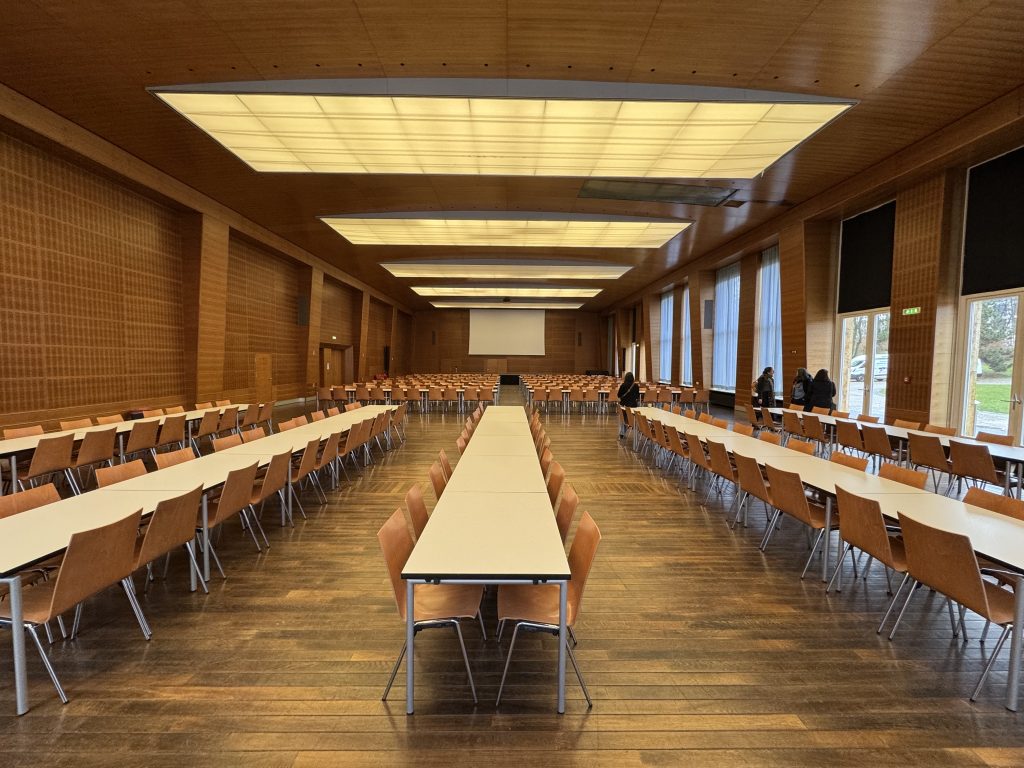
Casino Building (Festsaal Casino)
60323 Frankfurt am Main
Program items: Wednesday evening banquet
Accommodation
Rooms with reduced conference rates are available at several hotels, which are listed below grouped by neighborhood.
| Altstadt | Bockenheim | Bahnhofsviertel1 | Ostend2 |
| Motel One Frankfurt-Römer3 | – Mercure Hotel & Residenz Frankfurt Messe – Novotel Frankfurt City | – IntercityHotel Frankfurt Hauptbahnhof Süd – The Niu Charly | – 25hours Hotel The Goldman – The Niu Coin |
1While Bahnhofsviertel (area right around the main train station – Hauptbahnhof) tends to have cheaper accommodations, parts of the neighborhood can feel a bit rough.
2Although the hotels in Ostend are far from the conference venues by foot, they are actually quite well-connected via the subway (U-bahn).
3An eco-hotel option.
Note that the dates are automatically set to those for the conference. If you plan to arrive earlier and/or stay later, or have any other requests, please contact Vanessa Lehnfeld (phone: +49 (0) 69/24 74 55 – 400; email: info@infofrankfurt.de)
Airbnb does not exist in Frankfurt. For flat-style accommodation, you can use any online booking service and filter by “apartment-style” stay.
Transportation
Frankfurt is an international hub with the largest airport and the second largest train station in Germany. As such, Frankfurt is easily accessible using either method. Given our commitment to sustainability, the Local Organizing Committee strongly encourages those that can reach Frankfurt by train, bus, or even car to opt for these methods over air travel; see the sustainability section on our About page for more details. Travel within Frankfurt is also quite accessible. Options include transit by foot, bike, electric scooter, bus, tram, subway (U-bahn), and commuter train (S-bahn). Car-hailing services, including traditional taxis, are available but are more expensive and less sustainable than public transit options.
Travel To/From Frankfurt
- High-speed trains (ICE): ICE trains arrive in Frankfurt at either the main station (Hauptbahnhof) or the airport (Flughafen). Tickets can be purchased via Deutsche Bahn.
- Regional trains (RE/RB): Regional trains arrive in Frankfurt at a variety of the larger stations, including Hauptbahnhof, Flughafen, Frankfurt Süd, and Frankfurt West. Tickets can be purchased via Deutsche Bahn.
- Long-distance buses: Most long-distance buses arrive in Frankfurt near the main station (Hauptbahnhof). The main providers are BlaBlaCar Bus, Flibco, FlixBus, MarinoBus, RegioJet, and Sindbad.
- Airplane: The closest airport to Frankfurt is Frankfurt am Main Airport (FRA). We do not recommend using Frankfurt-Hahn Airport (HHN) as it is actually about two hours west of Frankfurt am Main.
Travel Within Frankfurt
Frankfurt’s local transit system is provided by RMV, which includes buses, trams, subway (U-bahn), and commuter trains (S-bahn). See here for a system map showing tram, U-bahn, and S-bahn stops. For a geographically accurate map, see here. The RMV website or app allows you to plan travel, purchase tickets, and check for alerts. It is more reliable and up-to-date than third party services (e.g., Google Maps). You can also purchase tickets at automated machines located at all tram, subway (U-bahn), and commuter train (S-bahn) stations. Bus stations do not have machines.
RMV uses the honor system for its trains meaning there are no entry barriers to the stations and you do not need to validate your ticket. However, RMV employees frequent the trains checking for tickets. If you are caught riding without a ticket, you will be fined €60. Being a visitor/tourist is not an excuse. Note that your registration fees include a multi-day ticket; however, you will not have access to the ticket until you check-in at the conference registration. As such, you will have to organize your own local travel prior to registration check-in.
If you plan to have a car while in Frankfurt, be aware that parking can be difficult to find and expensive.
Other Information
- Cell Service/WiFi/Power: There is generally good cell coverage in Frankfurt, but you will need to ensure you purchase an eSIM if your network provider does not offer service in Germany. The conference venues will provide WiFi. Power outlets in Germany use the type F plug and operate at a voltage of 230 V and a frequency of 50 Hz. Make sure to purchase an adapter if your devices use a different power plug/voltage/frequency.
- Childcare: Unfortunately, the conference cannot offer childcare services. Please contact the organizers if you are having difficulty with arranging childcare.
- Climate Control: In Germany, AC usage has still not been widely adopted. Hotels/hostels and restaurants may not have AC. We strongly encourage attendees to check if their accommodation will have climate control (Klimaanlage). Frankfurt can get up to the high 30s (Celcius) in the summer months during a heat wave. The conference venues at the Westend Campus have AC; however, the Senckenberg Museum does not.
- Emergencies: Dial 112 for emergencies and 110 for the police.
- Language: German is the official language of Germany. Although many Germans know English, especially in an international city like Frankfurt, be aware that not everyone will speak and/or understand English. Signage may only be in German. There are many translation tools available that can assist you such as DeepL or Google Translate.
- Money: Germany uses the euro as its currency. Although the pandemic has increased the use of digital and card payments, cash is still widely used in Germany. There may be businesses that only accept cash. You can withdraw money from an ATM (Geldautomat). Be aware that using an ATM or digital/card payment may result in foreign transaction fees if your home-country uses another currency.
- Necessities/Groceries: Necessities (e.g., toiletries) can be purchased at a “Drogerie Markt”, such as DM, Müller, or Rossman. Common grocery stores include Aldi, Edeka, Lidl, Netto, and Rewe. There are more options for vegan and organic foods at organic markets called “Biomarkt”.
- Restaurant Culture: Tipping in Germany is not mandatory but is accepted. A tip of 10% is standard for good service. Reservations are expected for most sit-down restaurants, especially during peak times (nights and weekends).
- Restrooms: In Germany, restrooms are often labeled “WC” or “Toilette(n)”. “D” or “Damen” is for women, and “H” or “Herren” is for men. Uni-sex restrooms can be used by all. Restrooms labeled “FLINTA” can be used by women, lesbians, intersex, non-binary, trans, and agender people.
- Rules: Germany has quiet hours from 10 pm to 6 am and all day on Sunday. All stores, including grocery stores, are closed on Sunday. Exceptions include many restaurants and bakeries. Please follow pedestrian traffic lights. Jaywalking is frowned upon so much so that you may get scolded for doing it.
- Safety: Violent crime is not common in Germany. Frankfurt is a relatively safe city; however, you should be aware of your surroundings and watch your belongings. Bahnhofsviertel (near the main train station) is the red-light district, so you may opt to avoid it if you are not comfortable being solicited. In high foot-traffic areas, such as Zeil and Römer, you may be asked for money by pan-handlers. Many of these people work in pan-handling gangs and are not truly in need.
- Visas: Travel to Germany may require a visa depending on your nationality. To see if your trip will require a visa, please visit this page. For details on the different types of visas and how to obtain one, visit this page.